
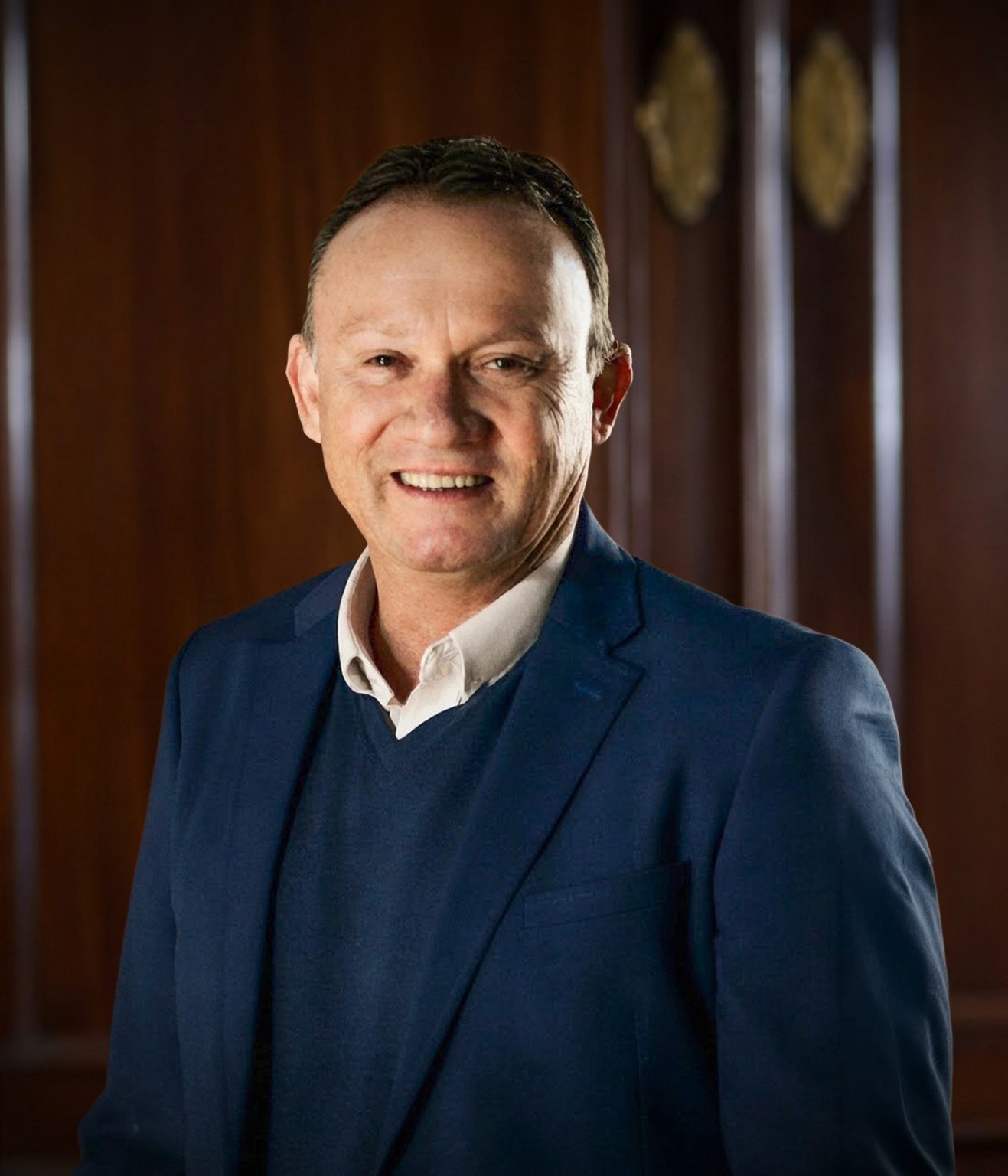
Pieter Kotzé’s passion for conservation was not acquired; it was inherited. The Chief Executive Officer of Historical Homes of South Africa Limited (HHSA) is the son of late Prof Dirk Kotzé, a well-renowned professor of history at the Stellenbosch University, and grew up in a world where the past was a living presence, one that included figures such as Gawie Fagan, the celebrated restoration architect. His father and Fagan were key in the restoration of Tulbagh after the 1969 earthquake. “What we protect is a common history that we love,” he says. “That is where it starts.”
It is a history that HHSA was created to defend. When Dr Anton Rupert founded the company in 1966, historic houses were being demolished across the country. Rupert’s response was as practical as it was visionary: buy them, restore them, and give them a working life again.
Sixty years on, Kotzé is adamant that sentiment alone does not keep a roof watertight. “We are run as a heritage business,” he says. “Return on investment matters. Every property has a detailed five year maintenance plan, and behind that plan sit specialist skills that must be found and passed on.” The discipline is deliberate: a company that pays its way can keep conserving long after goodwill runs out.
The model has proved itself. HHSA has paid a dividend every year since its inception, yet some shareholders, true to the spirit of the founding, have never cashed their dividend cheques, preferring that the money keep working for conservation. Demand tells the same story. There is a waiting list of people hoping to rent an HHSA property, which means the company can choose its tenants with care.
We look for tenants with a heart. They are not just occupants; they are our partners in conservation.
Because the business model has a distinctly human core. “We look for tenants with a heart,” Kotzé explains. “They are not just occupants; they are our partners in conservation.” It is also, he believes, the key to making restoration accessible rather than the preserve of a wealthy few. A building must be used to be loved, and loved to survive.
The portfolio reflects that philosophy, and Kotzé is keen to broaden it beyond the familiar gables of the Cape. Pressed for the property that matters most to him at present, his answer is telling: not a homestead but the Smidtswinkel (currently Deluxe Coffees, “Aan de Wagen Road Stellenbosch”), housed in a building of industrial character, proof that heritage is bigger than thatch and whitewash. He speaks with equal warmth of Ackermann House, “50 Dorp Street Stellenbosch”, where layers of Stellenbosch stories, including that of former tenant, statesman and premier Jan Smuts, live in the walls and long-serving tenants like Marsh carry the memory of the street itself.
You feel it the moment you step through the door. There is a feeling that something here is special.
That, in the end, is the return Kotzé values most. “You feel it the moment you step through the door. There is a feeling that something here is special.” The dividends are real, but the true yield is knowing that the well-maintained heritage property will still be there for those who come after us.